Leave a Message

Thank you for your message. We will be in touch with you shortly.

Pricing Your Canandaigua Home For Today’s Buyers

March 5, 2026

What is the right list price for your Canandaigua home right now? It is the question that decides how fast you move, how many buyers you reach, and what you net at closing. You want a price that feels confident, not wishful, and a plan that fits lake season and local demand. In this guide, you will learn how to set a defensible list price, how Canandaigua Lake proximity factors in, when to launch for maximum attention, and how New York’s disclosure rules affect your strategy. Let’s dive in.

Canandaigua market snapshot, dated and local

Before you pick a number, ground your expectations in live data. County-level figures show direction, while a city or neighborhood CMA nails the details.

  • As of December 2025, Ontario County’s median list price sits around $389,000 with a median of about 63 days on market and a median price per square foot near $204. County medians give you a starting range, not a final answer.
  • Zillow’s county Home Value Index through January 31, 2026 reports roughly $300,874 and notes faster pendings in the most active sub-markets. Different methodologies produce different numbers, so focus on trends and use a CMA for precision.
  • Within Canandaigua, medians vary by data set and property type. The most current pricing comes from your agent’s MLS-driven Comparative Market Analysis (CMA) that pulls recent closed sales, pendings, and actives right around your home.

Bottom line: treat county snapshots as context, then rely on a current CMA tailored to your street and style of home.

How agents set price: the CMA

A good CMA compares your home to 3–7 recent closed sales from the last 3–6 months, plus relevant active and expired listings. It adjusts for square footage, beds and baths, lot size, garage and finished space, recent renovations, and days on market. Price per square foot is helpful as a sense check, but it does not replace real adjustments.

  • Choose comps in the same neighborhood or within about a half mile to a mile when possible.
  • Prefer recent closed sales over pendings to anchor value.
  • Apply clear, line-item adjustments for material differences.
  • Present a range with a recommended list price and the reasoning behind it.

If you want to dig deeper into the method, review this step-by-step on how agents build CMAs from sold and active comps in your area. You can also ask your agent to walk you through their adjustment grid so you understand every dollar of the recommendation. See practical CMA guidance in this overview of how to do a Comparative Market Analysis. (how to do a Comparative Market Analysis)

Lake impact: waterfront vs. inland value

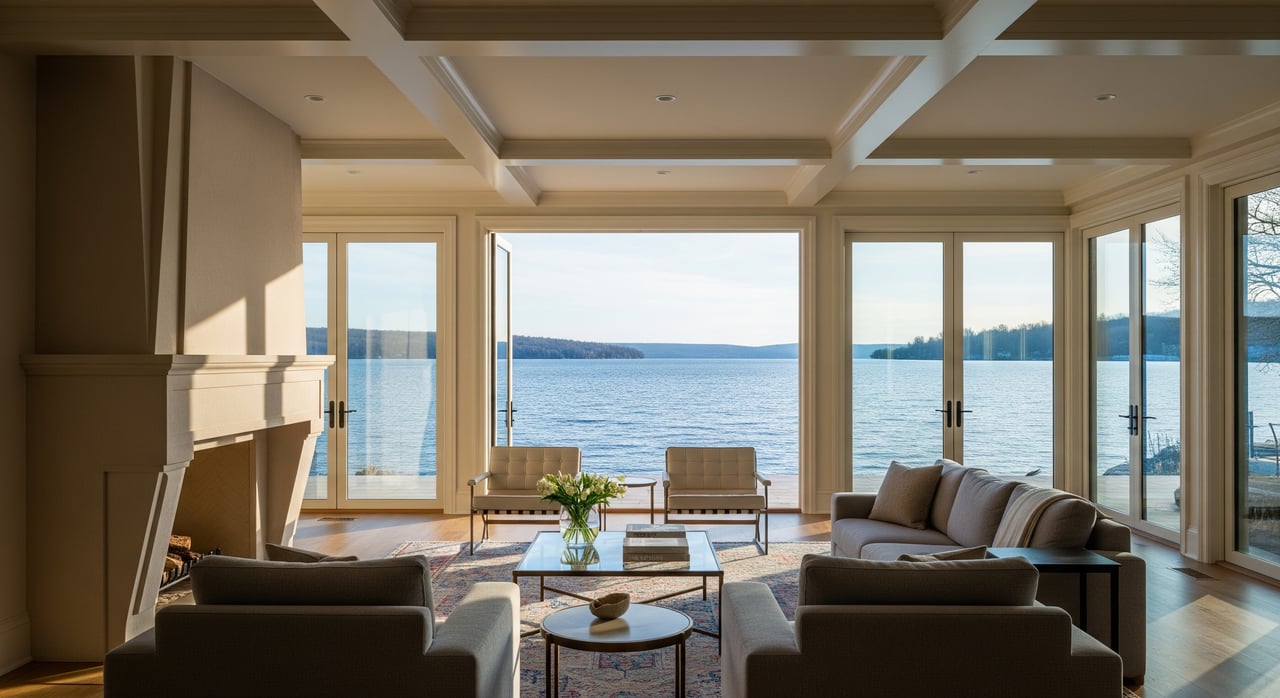
Canandaigua Lake is a major amenity, and it can change the price conversation. Waterfront or lake-view homes often command a premium, but there is no single percent that fits every property. The premium depends on:

  • Direct private frontage versus view-only
  • Dock and boathouse rights
  • Quality and accessibility of the shoreline
  • Water quality, privacy, and scarcity of similar inventory

Academic and practitioner reviews show that proximity to water often delivers a small positive premium, while true frontage and private access can add more, sometimes into the double digits, depending on local supply and buyer preferences. The only reliable way to pin down the premium is to compare recent Canandaigua-area waterfront sales to similar inland comps. For a research-based overview of how water amenities influence value, see this summary of waterfront capitalization effects. (waterfront amenity valuation overview)

Seasonality: timing your launch in a lake market

Season matters in the Finger Lakes. Local tourism and lake-season activity typically build in late spring and summer, which can boost buyer traffic for lake-proximate homes. Regional calendars and visitor guides highlight the events and patterns that influence showings and weekend traffic. Check the latest Finger Lakes visitor guide to spot high-activity periods and plan your launch around them. (Finger Lakes visitor guide)

Nationally, historical analysis points to mid-April as a strong week to list, with higher views and faster sales on average. In Canandaigua, layer this national window with local lake-season dynamics. If you are selling a lakefront or lake-view home, May through June often aligns with boating season and motivated buyers.

Condition and pre-list improvements that pay

You do not need to overhaul your home to get results. In most cases, you get better return from targeted, high-impact tune-ups than from large custom upgrades. Focus on:

  • Fresh paint in neutral colors and deep cleaning
  • Landscaping, lighting, and tidy curb appeal
  • Minor kitchen and bath refreshes, not full gut remodels
  • Fixing visible deferred maintenance like roof, HVAC, and safety issues

Document any major system replacements and recent service. These items reduce buyer concerns and can support value during appraisal. For a practical look at what appraisers consider and how to prep, review this appraisal preparation guide. (prep for appraisal and high-impact fixes)

New York disclosures that affect pricing

New York updated the Property Condition Disclosure Act, effective March 20, 2024. Sellers are now required to deliver a completed Property Condition Disclosure Statement to buyers. The old option to skip the form by giving a $500 credit at closing was removed. Be ready to provide the disclosure before contract signing and to answer questions about items like flood history and known defects. This can influence negotiations and reduce surprises later. You can read a plain-language overview of the current rules here. (New York State Bar Association disclosure guidance)

Pricing strategies that work in Canandaigua

Once you have a data-based price range, pick a strategy that fits your goals and the current micro-market.

  • Competitive market-match. List within about 0 to 3 percent of market value to capture the biggest buyer pool in the first 7 to 14 days. Your best shot at full-price or better is typically early in the listing.
  • Slight under-pricing to spark bids. If inventory is thin and your home shows well, pricing just below the comparable median can drive multiple offers and a stronger final price. This works best when your CMA shows recent sales closing above list in your segment.
  • Aspirational high ask. This approach risks slow showings, fewer offers, and a string of cuts. Evidence shows accurate early pricing usually beats starting high and chasing the market with reductions. For context on how early days on market relate to final net, see this timing and price-reduction analysis. (price reduction timing insights)

Launch tactics: day of week and visibility

If you are aiming for weekend traffic, a Thursday launch can help maximize early visibility into Friday and Saturday. Several listing platform reviews highlight late-week posting patterns that align with buyer behavior. Coordinate staging, photography, and marketing so you can hit a Thursday go-live without scrambling. For a quick overview of timing research and best weeks to list, review this summary. (listing timing insights)

Offers, appraisals, and price adjustments

Strong pricing can lead to multiple offers, but you still need a plan for the appraisal.

  • Appraisal gap risk. If a contract price comes in above the appraised value, lenders will not fund the difference. Options include the buyer paying the gap in cash, you adjusting the price, seeking a reconsideration or second appraisal, or re-negotiating terms. A quick primer on your choices is here. (what happens if appraisal is lower than offer)
  • Reduction strategy. If you do not get showings or offers in the first two weeks, a decisive adjustment is often better than a series of small cuts. Early momentum matters, and buyers can read a pattern of tiny reductions as weakness. See data-backed guidance on when and how to reduce. (when to reduce your price)

Your pre-list pricing checklist

Use this simple plan to set a smart number and hit the market with confidence:

  1. Request a local CMA
  • Ask for 3–7 nearby closed comps from the last 3–6 months, plus relevant actives and expireds.
  • Review line-item adjustments and agree on a low-mid-high range. Learn the basics in this CMA explainer. (CMA step-by-step)
  1. Complete New York disclosures
  • Fill out the Property Condition Disclosure Statement before contract signing. Keep records for flood history, repairs, and known issues. (NY PCDS overview)
  1. Make high-impact fixes and stage
  • Prioritize paint, landscaping, lighting, and clear repairs. Stage rooms to feel bright and functional. Use professional photography.
  • If you expect above-list interest, consider a pre-list inspection to head off appraisal and repair surprises. (appraisal prep guide)
  1. Price for your goal
  • Decide between competitive market-match or a slight under-price to spur bids. Avoid overpricing that will stall momentum.
  1. Plan the launch window
  • Aim for mid-April through May as a starting point, then align with local lake events and your target buyer. Consider a Thursday MLS launch for maximum weekend traffic. (timing insights)
  1. Prepare for appraisal outcomes
  • If bidding pushes the price above comps, discuss appraisal gap strategies with your agent and the buyer’s lender early. (low appraisal options)
  1. Monitor and adapt
  • Track showings, feedback, and online activity in the first 7–14 days. If traffic is soft, use the data to adjust decisively rather than inching down over weeks. (price reduction timing)

Final thoughts

Pricing your Canandaigua home is part data, part timing, and part story. The right number is rooted in fresh MLS comps, shaped by lake proximity and season, and supported by clean presentation and clear disclosures. When you combine those pieces, you meet today’s buyers where they are and give your home its best first impression.

If you want a local, no-pressure pricing consult and a CMA built on current Canandaigua comps, reach out to James "Bobby" Blaine. We will walk you through the range, the launch plan, and the small updates that help you sell with confidence.

FAQs

What is a CMA and how does it set price in Canandaigua?

  • A CMA compares your home to 3–7 recent nearby closed sales and relevant actives, then adjusts for size, features, and condition to give a defensible price range tailored to your neighborhood.

How much more is a Canandaigua Lake waterfront home worth?

  • It varies widely. Direct private frontage and dock rights often bring a larger premium than view-only, but the exact lift depends on recent local waterfront sales compared to similar inland comps.

When is the best time to list a Canandaigua home?

  • Nationally, mid-April is a strong week, and locally, late spring into early summer aligns with lake activity, which can help lake-area homes. Coordinate with your agent’s CMA and the Finger Lakes event calendar.

What does New York’s Property Condition Disclosure Statement require from sellers?

  • As of March 20, 2024, most sellers must provide a completed PCDS before contract signing, including details on known defects and flood history, which can influence negotiations and buyer confidence.

What happens if my buyer’s appraisal comes in lower than the offer?

  • Lenders limit loans to the appraised value. You and the buyer can discuss options like covering the gap with cash, adjusting the price, seeking a reconsideration, or re-negotiating terms.

Work With James

Get assistance in determining current property value, crafting a competitive offer, writing and negotiating a contract, and much more. Contact me today.